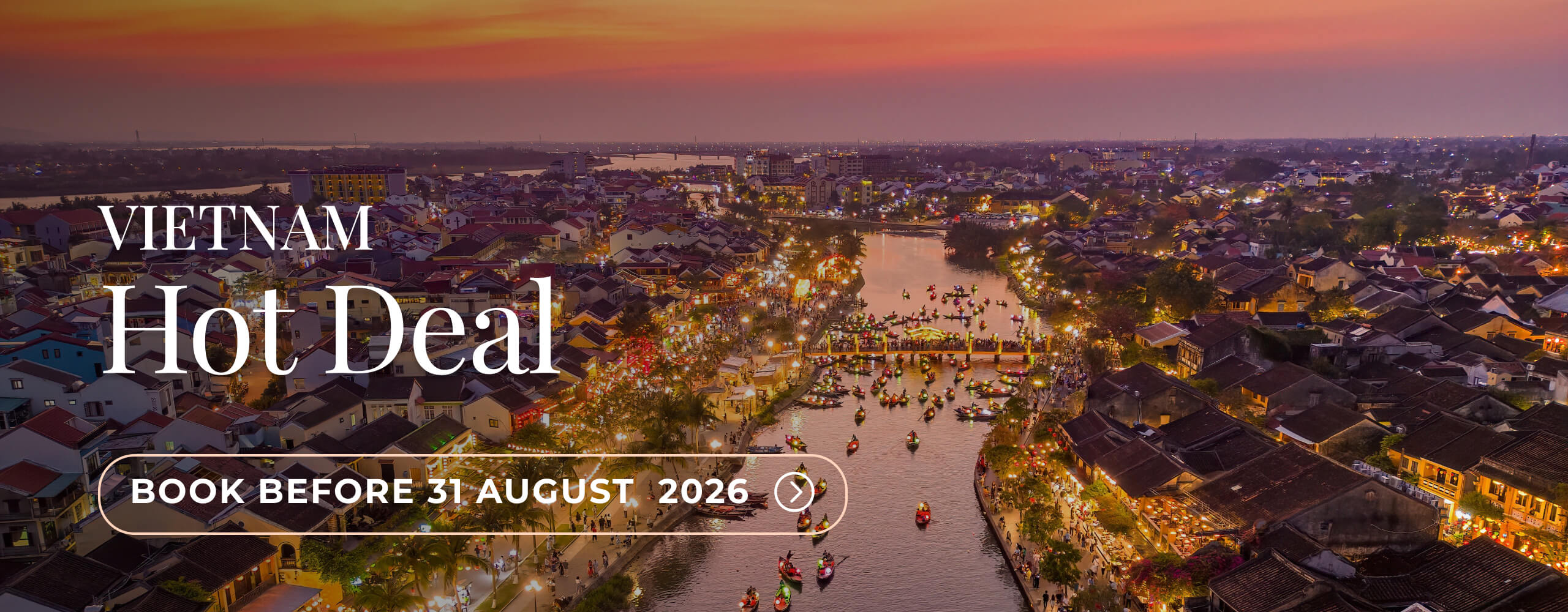
Hoi An’s old town is a deserved favourite amongst visitors to Vietnam – there is genuinely nowhere quite like it. But perhaps because of this, the country around it is often overlooked. Karma’s two Hoi An resorts, Karma Duyên and Karma Song Hoai both sit on quiet stretches of the river, within reach of the wider Da Nang region, offering a peaceful riverside base from which to explore the area.
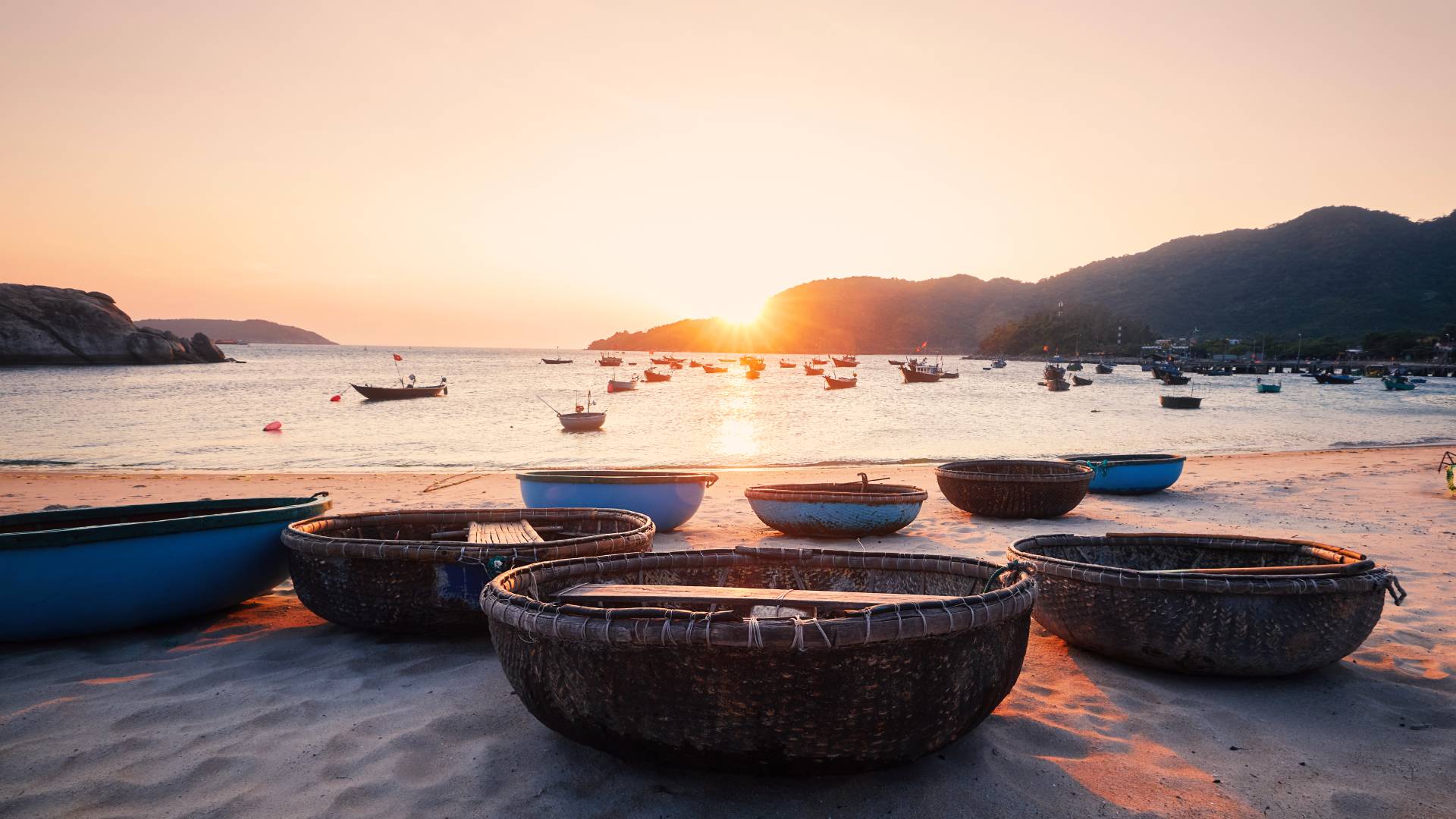
Twenty minutes offshore, Cu Lao Cham is a cluster of islands and a UNESCO biosphere reserve with 135 coral species and considerably fewer visitors than Hoi An’s lantern-lit lanes. Lunch is usually taken barefoot on Bai Chong beach after a morning’s snorkelling and a visit to Hai Tang Temple standing on the main island, older than most of Hoi An’s own pagodas.
Inland and up, Son Tra Peninsula, known locally as Monkey Mountain, holds Vietnam’s largest population of red-shanked douc langurs, a strikingly coloured primate found almost nowhere else, in forest just ten kilometres from central Da Nang.
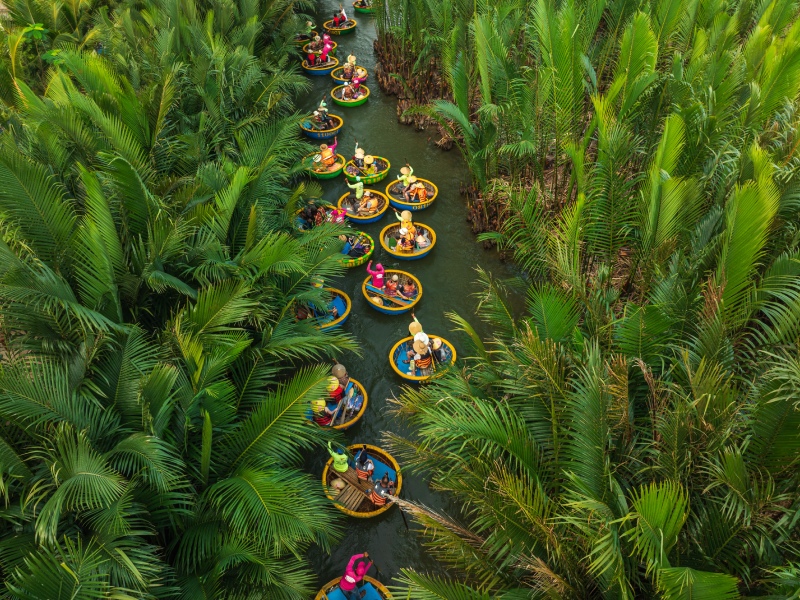
Closer to town, Tra Que village trades the crowded cooking classes of Hoi An proper for quieter vegetable gardens worked by the same families for generations, a bicycle and a basket sufficient to see the whole place.
None of it requires giving up Hoi An’s temples and tailors. It just means not stopping there.